The 20 Most Profitable Small Businesses

Posted on 06.49 by cewek sexy


This was amazing picture, what do you think about The 20 Most Profitable Small Businesses? I like while i see this great image The 20 Most Profitable Small Businesses.

20. Wired Telecommunication Carriers

Average Pretax Margin, 2000 to 2009: 10.1%

This industry comprises operators of, or suppliers to, transmission facilities for voice, data, text, sound and video using wired telecommunications. Hey, it's a wired world.


19. Support Activities for Oil and Gas Operations

Average Pretax Margin: 10.3%

Includes contract outfits that perform a variety of services, on a fee basis, for oil and gas operations (except site preparation and related construction activities). Services include, among other things: exploration (except geophysical surveying and mapping); excavating slush pits and cellars; well surveying; cementing, cleaning, bailing and chemically treating wells. Dirty work, but someone has to do it.


18. Offices of General or Family Practitioners

Average Pretax Margin: 10.4%

Insurance companies do all they can to crimp doctors' payouts, but treating junior's fevers still turns a handsome profit.


17. Diagnostic Imaging Centers

Average Pretax Margin: 10.5%

Small fry may have difficulty raising the scratch to buy expensive equipment; once it's installed, though, economies of scale start to kick in. Depending on the type of lab, the marginal cost of doing "one more" test--thanks to typically lean staffing--can be very small.


17. Veterinary Services

Average Pretax Margin: 10.5%

Includes licensed practitioners of veterinary medicine, dentistry, surgery and testing. If Spot needs help, even the expensive kind, he's going to get it.


15. Investment Advice

Average Pretax Margin: 11%

These are financial planners who don't have the authority to execute trades. Few things are as opaque as fees for financial-services fees--which is probably why this industry makes our list.


15. Offices of Physical, Occupational and Speech Therapists, and Audiologists

Average Pretax Margin: 11%

These outfits operate private or group practices (clinics and centers) or in the facilities of others, such as hospitals or HMO medical centers. More proof that specialization pays.


13. Consumer Lending

Average Pretax Margin: 11.1%

Comprises companies primarily engaged in making cash loans or extending credit through various means (except credit cards and sales finance agreements). Two words: pricing power.


12. Offices of Physicians (except Mental Health Specialists)

Average Pretax Margin: 11.2%

Eight years of medical school and a tortuous residency pay off. No matter what the economy is doing, there are always sick people to treat. Still, general docs have steadily lost pricing power at the hands of large insurance providers.


11. Insurance Agencies and Brokerages

Average Pretax Margin: 11.3%

Included here are insurance agents and those that provide other services, like claims adjustments. Successful agents enjoy annuity-style profit streams: They nab an up-front commission upon selling a policy, as well as fees each year that the policy stays in place.


10. Lessors of Nonresidential Buildings (Except Mini-Warehouses)

Average Pretax Margin: 11.6%

Included in this industry are owner-lessors of nonresidential buildings; renters of real estate who then act as lessors in subleasing it to others; and those who provide full-service office space, be it on a lease or service contract basis. The group also may include those who manage property themselves or have another establishment manage it for them. There's a term that describes the juicy economics at play here: mailbox money.


9. Offices of Optometrists

Average Pretax Margin: 12.2%

These practitioners have the degree of O.D. (Doctor of Optometry). They examine, diagnose, treat and manage diseases and disorders of the human visual system--that means prescribing and/or providing eyeglasses, contact lenses, low vision aids and vision therapy. These outfits operate private or group practices (clinics and centers) or in the facilities of others, such as hospitals or HMO medical centers.


8. Lessors of Mini-Warehouses and Self-Storage Units

Average Pretax Margin: 12.3%

More mailbox money--and little upkeep required. No wonder storage units are No. 8 on our list.


7. Freestanding Ambulatory Surgical and Emergency Centers

Average Pretax Margin: 14.8%

Services include orthoscopic and cataract surgery on an outpatient basis; setting broken bones, treating lacerations, or tending to patients suffering injuries as a result of accidents, trauma or other problems that need immediate attention. These facilities include operating and recovery rooms, and specialized equipment, such as anesthetic or X-ray machines. In short: If a big rock falls on your leg, you're going to find a way to fix it--fast.


6. Sales Financing

Average Pretax Margin: 15.1%

These companies are popular in a credit crunch. They lend money for the purpose of providing collateralized goods through a contractual installment sales agreement, either directly from, or through, arrangements with dealers.


5. Tax Preparation Services

Average Pretax Margin: 15.1%

Who likes doing their taxes? Exactly.


4. Offices of Dentists

Average Pretax Margin: 15.4%

Dentists enjoy operating scale--that is, they can handle several patients at once. Some of the equipment is expensive, but hygienists don't cost much. Better yet, a lot of customers pay out of pocket. That gives dentists more pricing power relative to other medical providers.


3. Other Accounting Services

Average Pretax Margin: 15.5%

Various accounting, bookkeeping, billing and tax preparation services in any form, handled not necessarily by a Certified Public Accountant (see No. 1 on our list).


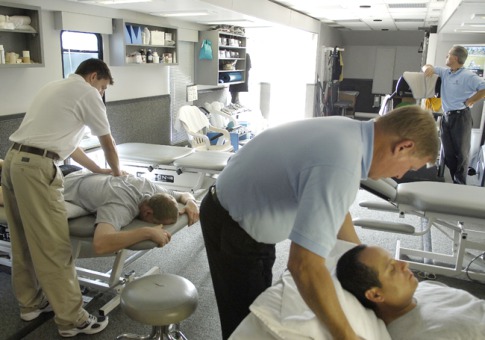
2. Offices of Chiropractors

Average Pretax Margin: 16%

Some question the medicinal value of their service. Hard to question their financial performance, though.


1. Offices of Certified Public Accountants

Average Pretax Margin: 17.1%

The most profitable niche of the bunch enjoys a nice mix of pricing power (everybody needs accountants, no matter how the economy is doing), low overhead and marketing scale, thanks to plenty of repeat clients.


Leaver your comment about The 20 Most Profitable Small Businesses.

America's Best-Paying Blue-Collar Jobs

Posted on 01.13 by cewek sexy


This was amazing picture, what do you think about America's Best-Paying Blue-Collar Jobs? I like while i see this great image America's Best-Paying Blue-Collar Jobs.

Elevator installer and repairer

Average annual salary: $67,950

Average hourly wage: $32.67

Annual pay for top 10%: $98,190

Best-paying state: California

What they do: Install and repair elevators, escalators and dumbwaiters.


Powerhouse substation and relay repairer

Average annual salary: $61,700

Average hourly wage: $29.94

Annual pay for top 10%: More than $81,560

Best-paying state: California

What they do: Inspect, test, repair or maintain electrical equipment in generating stations.


Transportation inspector

Average annual salary: $61,110

Average hourly wage: $29.38

Annual pay for top 10%: $104,940

Best-paying state: District of Columbia

What they do: Inspect equipment or goods in transit. Includes rail transport inspectors.


Oil and gas rotary drill operator

Average annual salary: $59,560

Average hourly wage: $28.63

Annual pay for top 10%: More than $89,100

Best-paying state: Alaska

What they do: Set up or operate drills to remove petroleum products from the earth.


Commercial diver

Average annual salary: $58,060

Average hourly wage: $27.91

Annual pay for top 10%: More than $94,130

Best-paying state: California

What they do: Work underwater using scuba gear to inspect, repair, remove or install equipment and structures.


Petroleum pump system operator, refinery operator and gauger

Average annual salary: $56,990

Average hourly wage: $27.37

Annual pay for top 10%: More than $78,020

Best-paying state: Alaska

What they do: Control the operation of petroleum refining and processing units.


Boilermaker

Average annual salary: $56,680

Average hourly wage: $27.25

Annual pay for top 10%: More than $80,930

Best-paying state: Alaska

What they do: Construct, assemble, maintain and repair stationary steam boilers.


Electrical power line installer and repairer

Average annual salary: $58,860

Average hourly wage: $26.86

Annual pay for top 10%: More than $80,310

Best-paying state: California

What they do: Install or repair electric power lines and cables.


Locomotive engineer

Average annual salary: $53,590

Average hourly wage: $25.77

Annual pay for top 10%: $88,690

Best-paying state: New Mexico

What they do: Drive trains, to transport humans or freight.


Telecommunications equipment installer and repairer

Average annual salary: $52,990

Average hourly wage: $25.48

Annual pay for top 10%: More than $71,650

Best-paying state: Massachusetts

What they do: Set up, rearrange or remove switching and dialing equipment in offices.


Leaver your comment about America's Best-Paying Blue-Collar Jobs.

Official Notice of Formal Apology

Posted on 03.53 by cewek sexy


This was amazing picture, what do you think about Official Notice of Formal Apology? I like while i see this great image Official Notice of Formal Apology. Ever felt like monitoring apologies at your work or study place?

Well here is a solution for you. Use this form and ask the folks who should submit a formal apology fill this with utmost clarity. Enjoy!


Click on the Image for full View......


Leaver your comment about Official Notice of Formal Apology.

America's Best Places To Raise A Family

Posted on 23.03 by cewek sexy


This was amazing picture, what do you think about America's Best Places To Raise A Family? I like while i see this great image America's Best Places To Raise A Family.

These 10 cities are safe, affordable and offer good educational prospects.

No. 10: Buffalo-Niagara Falls, N.Y.

Cost-of-Living Rank: 4
Crime Rate Rank: 36
Commuting Rank: 4
Household Income Rank: 82
Home Ownership Rank: 64
Homeowner Costs Rank: 23
Education Rank: 12


No. 9: Albany-Schenectady-Troy, N.Y.

Cost-of-Living Rank: 45
Crime Rate Rank: 17
Commuting Rank: 23
Household Income Rank: 30
Home Ownership Rank: 68
Homeowner Costs Rank: 33
Education Rank: 8


No. 8: Knoxville, Tenn.

Cost-of-Living Rank: 33
Crime Rate Rank: 55
Commuting Rank: 7
Household Income Rank: 89
Home Ownership Rank: 21
Homeowner Costs Rank: 3
Education Rank: 10


No. 7: Pittsburgh, Pa.

Cost-of-Living Rank: 22
Crime Rate Rank: 9
Commuting Rank: 72
Household Income Rank: 79
Home Ownership Rank: 15
Homeowner Costs Rank: 12
Education Rank: 7


No. 6: Ogden-Clearfield, Utah

Cost-of-Living Rank: 31
Crime Rate Rank: 16
Commuting Rank: 61
Household Income Rank: 21
Home Ownership Rank: 1
Homeowner Costs Rank: 38
Education Rank: 35


No. 5: Provo-Orem, Utah

Cost-of-Living Rank: 34
Crime Rate Rank: 6
Commuting Rank: 44
Household Income Rank: 28
Home Ownership Rank: 16
Homeowner Costs Rank: 52
Education Rank: 1


No. 4: Syracuse, N.Y.

Cost-of-Living Rank: 11
Crime Rate Rank: 13
Commuting Rank: 9
Household Income Rank: 72
Home Ownership Rank: 47
Homeowner Costs Rank: 20
Education Rank: 6


No. 3: Rochester, N.Y.

Cost-of-Living Rank: 6
Crime Rate Rank: 18
Commuting Rank: 6
Household Income Rank: 57
Home Ownership Rank: 28
Homeowner Costs Rank: 40
Education Rank: 20


No. 2: Harrisburg-Carlisle, Pa.

Cost-of-Living Rank: 24
Crime Rate Rank: 10
Commuting Rank: 26
Household Income Rank: 40
Home Ownership Rank: 25
Homeowner Costs Rank: 15
Education Rank: 25


No. 1: Des Moines-West Des Moines, Iowa

Cost-of-Living Rank: 21
Crime Rate Rank: 28
Commuting Rank: 3
Household Income Rank: 32
Home Ownership Rank: 8
Homeowner Costs Rank: 26
Education Rank: 4


Leaver your comment about America's Best Places To Raise A Family.

The World's Biggest Illicit Industries

Posted on 08.01 by cewek sexy


This was amazing picture, what do you think about The World's Biggest Illicit Industries? I like while i see this great image The World's Biggest Illicit Industries.

Drugs

Estimate: U.S. $300 billion

The world's top illicit business. The trafficking of cocaine, marijuana, heroin and other drugs has continued despite the expensive efforts of world government. This is a massive industry and political problem, financing violent groups like the Taliban and drug cartels that currently threaten the stability of important countries like Afghanistan and Mexico. The amount of money at stake in the global drug trade can at best be estimated in the neighborhood of maybe $300 billion, according to the United Nations Office on Drugs and Crime. Some people have criticized the figure as being too high.


Counterfeits

Estimate: U.S. $250 billion

The world is awash in fakes--from trademarks like Pepsi to copyrighted music and high-tech inventions like pharmaceuticals or computer chips. From books to videogames, nothing is safe. The World Customs Organization guesses that counterfeiting accounts for 5% to 7% of global merchandise trade. The Organization for Economic Cooperation and Development in 2009 said the international trade in counterfeit and pirated goods increased to more than U.S. $250 billion, almost 2% of world trade, up from U.S. $200 billion in 2007.


Illicit Arms Trafficking

Unknown

It's impossible to even guess the total size of the illicit arms market. It is also often hard to determine when the trafficking of small arms becomes an illegal act. Still, the trade in illicit arms fuels civil wars and worries counterterrorism officials, especially when it comes to loose nukes. Regions like Central Africa are saturated with illicit weapons and illicit arms smuggled out of the U.S. are increasingly exacerbating criminal activity in Mexico.


Cigarettes

Estimate: U.S. $30 billion

There are some 600 billion cigarettes smuggled worldwide each year, a $30 billion illicit industry according to the United Nations Office on Drugs and Crime. Cigarettes are the world's most smuggled legal product. Much of this activity is a result of the vice taxes nations use to control the spread of addictive drugs that are legal. High taxation generates shadow markets in places ranging from Latin America to New York state.


Cargo Theft

Estimate: U.S. $30 billion

Cargo theft is as much as a $30 billion problem annually, according the Federal Bureau of Investigation, which points out it can include anything moved by truck or plane--tailored suits, frozen shrimp, computer chips, toilet paper. These are often non-violent thefts of goods in transit, but they can include sophisticated methods that often involve surveillance. The U.S., Mexico, Brazil, South Africa, Russia, India and the U.K. are the countries most at risk for cargo theft globally, according to FreightWatch International.


Human Trafficking

Estimate: U.S. $28 billion

Interpol says human trafficking and illicit migration is a $28 billion enterprise. This sad business, broadly speaking, can take the form of modern slavery, sexual exploitation, or organ harvesting, destroying the lives of its victims and enriching brutal criminal groups. The victims are often trapped and forced to work as prostitutes or migrant workers. This illegal trade in human beings is one of the fastest growing criminal activities globally, U.N. Special Rapporteur Joy Ngozi Ezeilo said recently.


Stolen Oil

Estimate: Billions of dollars

Shell last year estimated that as much as 100,000 barrels of oil are smuggled out of Nigeria each day--at the time, some $1.6 billion annually. In Mexico, Pemex estimates it loses $700 million annually to petro thieves who tap into its pipelines. Texas oil men have pleaded guilty to conspiring to sell stolen Mexican oil. Most of the pirate attacks off the coast of Somalia or in the Malacca Strait involve oil tankers that are ransomed. A Council on Foreign Relations report suggests such piracy costs between $1 billion and $16 billion.


Art Theft

Estimate: U.S. $6 billion

The five paintings worth $125 million by great artists like Picasso and Matisse stolen from the Museum of Modern Art in Paris in May show the business of art theft remains strong. The FBI says this is a $6 billion racket. Famous pieces of art can be held for ransom, less well-known items can be sold. Security at many galleries is not robust, so the challenge for thieves is in collecting cash for their efforts. A Swiss waiter, Stephane Breitwieser, easily stole 239 items over 10 years from museums in six countries.


Illicit Wildlife

Estimate: U.S. $5 billion

Global trade in illicit wildlife, like tiger parts and elephant ivory, has recently been estimated by the Congressional Research Service to be worth at least $5 billion annually. The smuggling of caviar, rhino horns and exotic reptiles also fuel this trade. The root of this industry is in Southeast Asia, where poachers and middlemen operate in countries like Laos and Thailand. Two tones of elephant tusks were recently seized in Vietnam, and Brazil confiscated shark fins headed for Japan.


Leaver your comment about The World's Biggest Illicit Industries.